AI agents are the biggest shift in small business software since the smartphone. In 2026, a solo founder can run a sales team, a support desk, and an operations department using AI agents that cost less per month than a single part-time hire. This guide explains what AI agents actually are, the types small businesses should care about, real use cases, what they cost, and how to get started — in plain English.
What is an AI agent, in plain English
An AI agent is a piece of software that uses a large language model — the same technology behind ChatGPT — to make decisions and take actions on your behalf. That last part is what makes it an agent instead of a chatbot.
A chatbot answers a question. An agent reads the question, decides what to do, looks up your CRM, checks the calendar, sends the email, updates the deal, and reports back — without a human in the middle.
Think of an agent as a junior employee who:
- Never sleeps
- Never forgets a follow-up
- Costs cents per task instead of dollars per hour
- Can be cloned instantly when you need more capacity
- Improves every time you give it feedback
The technology finally works well enough in 2026 that small businesses — not just enterprises — can deploy agents in production for real customer-facing work.
Why small businesses have the biggest advantage
Big companies have compliance reviews, legacy CRMs, and ten stakeholders per decision. Small businesses can deploy an AI agent this week and see results by Friday. The playing field has flipped: for the first time, a five-person business can operate with the reach of a fifty-person business.
The businesses winning right now share three traits — they treat AI agents as staff, they start with one narrow use case, and they measure results in dollars saved and meetings booked, not in how impressive the tech looks.
The types of AI agents small businesses should know
Not all agents are the same. Here are the categories that actually move revenue for small teams.
Sales agents
Sales agents handle the top of the funnel — the work that traditionally burns out SDRs. A well-built sales agent:
- Researches a prospect's company, role, and recent activity
- Writes personalized cold emails or LinkedIn messages
- Handles objection replies and reschedules
- Qualifies inbound leads through conversation
- Books meetings directly on your calendar
- Updates the CRM after every interaction
The result: a two-person team producing the outbound volume of a six-person team, with better personalization and zero drop-off on follow-ups.
Customer support agents
Customer support agents live inside your help widget, email inbox, or messaging apps. They read the incoming question, search your knowledge base, draft a reply, and either send it directly (for tier-1 questions) or escalate to a human with a summary and suggested response.
Small businesses using support agents typically see:
- 60–80% of tickets resolved without human touch
- Response times under 30 seconds instead of hours
- Support available 24/7 without night shifts
- Consistent tone and accuracy across every reply
The best ones are trained on your actual docs, past tickets, and product changelog — so they sound like your team, not a generic bot.
Voice agents
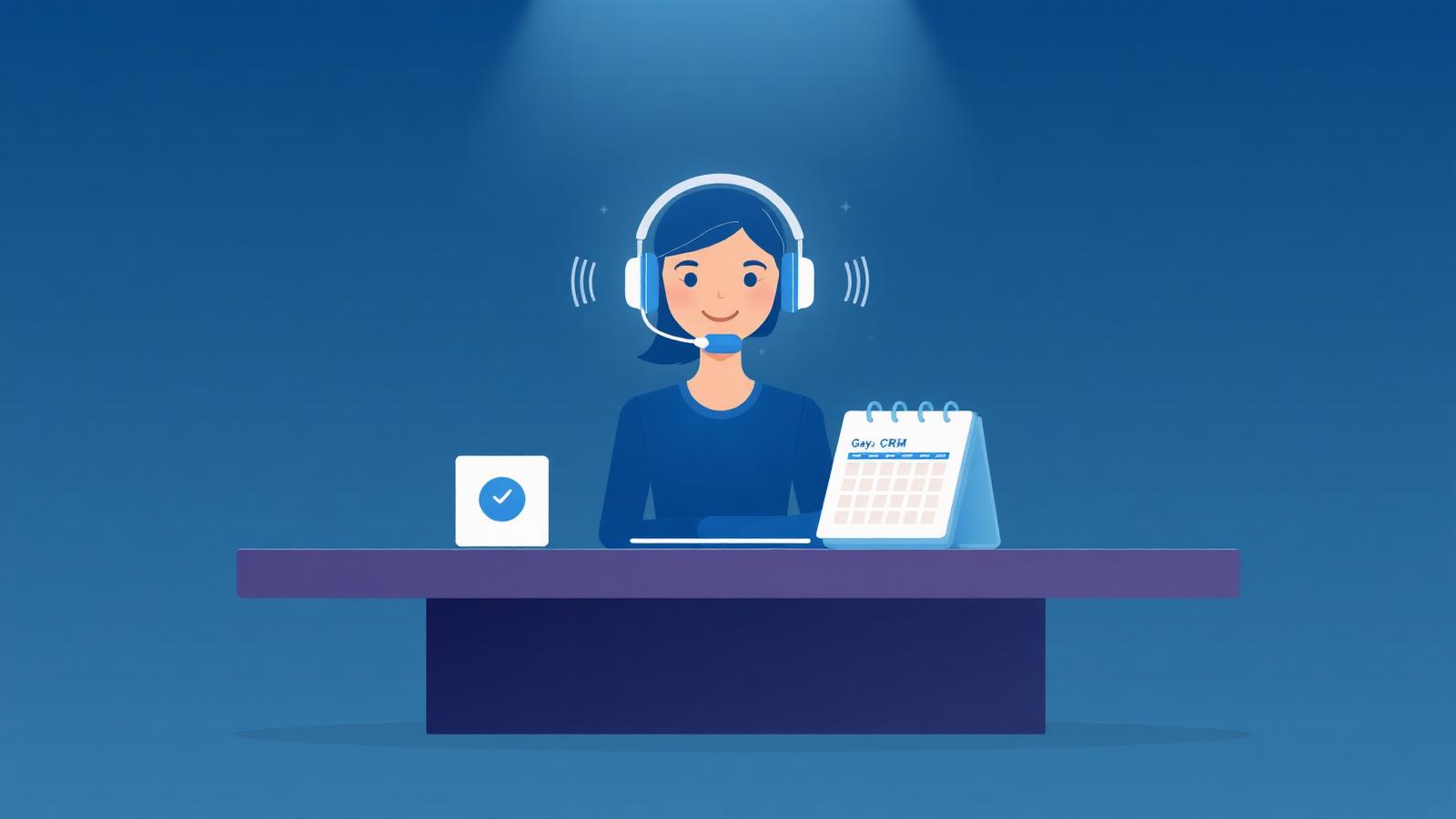
Voice agents are the biggest 2026 unlock. They answer phones, make outbound calls, qualify leads, book appointments, and confirm bookings — in natural, human-sounding conversation.
Use cases that work today:
- Missed-call recovery. Every missed call gets a callback within 30 seconds from a voice agent that qualifies and books.
- Appointment reminders and rebooking. Cuts no-shows by 30–50%.
- Inbound qualification. Callers get a warm conversation, share what they need, and land on the right rep's calendar.
- Cold reactivation. Working through old, cold leads at a cost that finally makes it profitable.
For service businesses — clinics, agencies, home services, coaches — a voice agent often pays for itself in the first week just from recovered missed calls.
WhatsApp agents
WhatsApp has passed 3 billion users and, in most of the world outside the US, it's the default business channel. A WhatsApp agent lets small businesses:
- Answer product questions with images and links
- Take orders and payments end-to-end
- Qualify inbound inquiries and route hot leads to a human
- Send booking confirmations, reminders, and post-purchase follow-ups
- Handle FAQs in the customer's language automatically
For e-commerce, coaching, real estate, and local services, WhatsApp agents often outperform website chat by 3–5x on conversion because customers are already there every day.
Telegram agents
Telegram is where communities, crypto projects, digital creators, and international B2B live. Telegram agents shine at:
- Onboarding new group members
- Answering FAQs inside a community without spamming
- Notifying members about updates, drops, or events
- Running gated access and paid membership flows
- Delivering AI-powered concierge experiences to a subscriber base
For creators and community-driven businesses, a Telegram agent is often the difference between a 10,000-member group that runs itself and one that consumes the founder's every evening.
Gmail AI automation
Your inbox is where deals live and die. Gmail-integrated AI agents can:
- Read every incoming email and label, prioritize, or archive it
- Draft replies in your voice for you to approve with one click
- Auto-respond to common questions with knowledge-base answers
- Extract meetings, tasks, and deadlines and push them to your CRM or task manager
- Follow up on unanswered emails after a set number of days
- Summarize long threads into two-line briefs
A founder who was drowning in 200 emails a day can reasonably reclaim two to three hours daily. That's a full working month back per year.
CRM AI
CRM AI is the connective tissue that makes every other agent smarter. It sits on top of HubSpot, Pipedrive, GoHighLevel, Salesforce, or Zoho and:
- Enriches every new contact with firmographic and social data
- Deduplicates and merges records automatically
- Scores leads based on real behavior, not just points on a form
- Summarizes every call, meeting, and email thread onto the contact record
- Suggests next-best actions for each deal
- Auto-drafts follow-ups when a deal stalls
A CRM that used to be a graveyard of stale contacts turns into a live, self-updating revenue system.
Real-world small business use cases
Theory is cheap. Here's what small businesses are actually shipping in 2026.
The solo consultant
A one-person consulting practice runs a voice agent to answer discovery calls, a Gmail agent to draft proposals, and a CRM agent to update deals after every conversation. The founder spends time on delivery, not admin, and revenue per hour has doubled.
The five-person agency
An agency uses a sales agent for outbound cold email, a WhatsApp agent to handle inbound leads from their ads, a support agent for existing clients, and a Gmail agent to keep the founder's inbox at zero. Headcount stayed the same; billable output tripled.
The local service business
A plumbing company deploys a voice agent that answers every call — including after hours — qualifies the job, quotes the standard callout fee, and books the slot straight into the technician's calendar. Missed-call revenue that used to disappear now converts, and the front-desk role got redirected to actual customer relationships.
The e-commerce brand
A DTC brand runs a WhatsApp agent that handles pre-purchase questions ("does this fit a size 10?"), sends abandoned-cart nudges, processes post-purchase support, and upsells related products. Conversion rate up 22%, support tickets to human staff down 70%.
The coaching business
A coach runs a Telegram agent inside her paid community that onboards new members, answers curriculum questions, sends daily prompts, and flags members who go quiet so she can re-engage them personally. Retention climbed from 40% to 78%.
The SaaS founder
A bootstrapped SaaS founder runs a support agent trained on the docs and changelog, a sales agent for demo-request follow-ups, and a CRM agent that summarizes every trial user's activity into a one-line brief before demo calls. Two-person team punching at ten-person weight.
What AI agents actually cost
The honest answer: dramatically less than you think.
- Model costs. Modern models cost fractions of a cent per interaction. A busy support agent handling 5,000 tickets a month typically runs $30–$150 in model fees.
- Infrastructure. Self-hosted on a small VPS is $5–$40 a month. Managed platforms range from $50–$500 a month depending on volume.
- Build. A production-ready agent for one narrow use case typically costs a few thousand dollars, once. A full multi-agent stack for sales, support, and ops sits in the low-to-mid five figures — and replaces headcount worth many multiples of that annually.
Compare that to the cost of one full-time hire and the math is not close.
How to get started with AI agents
The pattern that works for small businesses:
- Pick the most painful, most repetitive task first. Not the sexiest one — the most painful. Usually it's inbound response, missed calls, or CRM hygiene.
- Deploy one narrow agent for that task. Not a "do everything" super-agent. One job, done well.
- Keep a human in the loop for the first two weeks. Every draft gets reviewed. Every action gets approved. Build trust with evidence.
- Turn the human loop off gradually. Category by category, hand full autonomy over.
- Measure in dollars and hours. Meetings booked, tickets resolved, hours saved, revenue recovered. Not "how cool is this."
- Compound. Once one agent works, add the next. Each new agent takes half the time to ship because your data pipes already exist.
Common mistakes to avoid
- Trying to build one agent that does everything. Narrow beats wide, every time.
- No feedback loop. If you don't score outputs and correct mistakes, the agent never improves.
- Skipping the CRM integration. An agent that doesn't write back to your source of truth creates data debt.
- No guardrails. Never let an agent send unbounded emails, spend money, or delete records without limits.
- Using consumer ChatGPT as your production stack. Fine for drafting; wrong for automation. Use proper APIs, logging, and permissions.
- Ignoring the boring wins. The unglamorous automations — inbox triage, CRM enrichment, meeting scheduling — are where the ROI is.
Best practices for small businesses
- Own your data. Keep customer records in a database you control. Agents read from and write to it — they aren't the source of truth.
- Log everything. Every prompt, every response, every action. When something goes wrong (and it will), logs are how you find and fix it in minutes.
- Version your prompts. Treat the instructions you give your agents like code. Save changes, review them, roll back when needed.
- Start with one channel. Master email before you add voice. Master voice before you add WhatsApp. Layer, don't sprawl.
- Review outputs weekly. Sample 20 conversations a week. Score them. Feed corrections back into the agent's instructions.
- Publish an AI policy. Tell customers when they're talking to an agent and when a human takes over. Trust is a moat.
Frequently asked questions
Do I need to know how to code to use AI agents?
No. Modern agent platforms — including the ones we build on, like n8n — are visual. A non-technical founder can operate and tune agents. Building the initial system usually benefits from a developer or a specialist agency; running it does not.
Will AI agents replace my team?
They replace tasks, not people. The teams we work with rarely shrink after deploying agents — they grow revenue instead. Your people stop doing repetitive work and start doing judgment work: closing bigger deals, building better products, taking care of top customers.
Are AI agents safe for customer-facing conversations?
Yes, when built correctly. That means narrow scope, guardrails, escalation paths for anything ambiguous, and human review for the first weeks. Done wrong, they will make embarrassing mistakes in public — which is why the build matters.
How long does it take to launch an AI agent?
A single narrow agent — support, inbound qualification, appointment booking — takes 1–3 weeks from kickoff to production. A multi-agent stack for a full sales-and-support system takes 4–8 weeks.
Which AI model should I use?
You don't need to pick. A good agent stack routes different tasks to different models — fast cheap models for classification, larger models for reasoning, voice models for phone calls. The infrastructure abstracts this away.
Can AI agents work in languages other than English?
Yes. Modern models are strong in 40+ languages. WhatsApp and voice agents in particular perform well across Spanish, Portuguese, Arabic, French, German, Hindi, and most major European and Asian languages.
Will Google or my CRM ban me for using AI?
No — as long as you use the official APIs and respect rate limits. Every major platform (Gmail, HubSpot, Salesforce, WhatsApp Business, Telegram) has sanctioned integration paths. Problems arise from scraping and abuse, not legitimate automation.
What about privacy and data compliance?
Serious agent stacks run on infrastructure you own, with encrypted storage, audit logs, and role-based access. For GDPR, HIPAA, and similar regimes, self-hosted deployments give you the control regulators expect.
What's the ROI I should expect?
Well-built agents typically pay back in 30–90 days. For inbound-heavy businesses (missed calls, slow lead response, high ticket volumes), payback is often in the first two weeks.
Do you build AI agents for small businesses?
Yes — that's core to what we do. GetLeadExpo designs and deploys production AI agents for sales, support, voice, WhatsApp, Telegram, Gmail, and CRM. See our [AI agent development service](/services/ai-agent-development) or [book a call](/contact) to scope your first agent.
Conclusion — the year to stop procrastinating
AI agents are no longer a future bet. In 2026, they are the highest-leverage move a small business can make, full stop. Every month you wait is a month a competitor deploys them first, answers your prospect's inquiry in 30 seconds while you take 30 hours, and quietly compounds the advantage.
You don't need a big budget. You don't need a technical co-founder. You need one clear use case, one well-built agent, and the willingness to measure results in dollars.
Ready to deploy your first AI agent? [Book a free strategy call](/contact) with the GetLeadExpo team, or explore our [AI agent development](/services/ai-agent-development) and [AI voice agent](/services/ai-voice-agent) services — and see what your business looks like when the repetitive work runs itself.
Ashikur Rahman
Founder, GetLeadExpo
Writing about B2B lead generation, deliverability, and n8n AI automation at GetLeadExpo.